 Rosedil
Scalp Care for Thinning Hair: Look After the Soil, Not Just the Strands
Updated · rosedilhair.com editorial team · Reviewed against public health sources listed below
Short answer: A calm, clean scalp will not thicken hair on its own, but it gives every strand a better place to grow and makes thinning look less obvious. For women with thinning hair, good scalp care means washing regularly with a mild shampoo, calming flaking and itch, avoiding tension and too much heat, protecting a scalp that shows through from the sun, and knowing which scalp signs need a doctor.
When hair starts to thin, all the attention goes to the strands: the part, the ponytail, the hair in the drain. The scalp gets ignored, or worse, scrubbed, oiled and scratched in the hope of "waking it up." Yet the skin on top of your head is where every hair is made. Think of it as the soil, and your hair as what grows from it.
Why does the scalp matter when hair thins?
Every hair grows from a follicle set into the skin of the scalp. When that skin is irritated, flaky or inflamed, three things happen that make thinning harder to live with:
- You scratch. Scratching and rubbing break fragile strands and, in nervous habits, can pull hairs out. MedlinePlus lists continual hair pulling or scalp rubbing among the causes of hair loss.
- Flakes and buildup show. On a scalp that already shows through the part, white flakes and greasy patches draw the eye straight to it.
- Styling gets harder. An oily or itchy scalp means more washing, more product and more heat, which all wear on fine hair.
A calm scalp does not fix everything. It is the base that makes everything else work better.
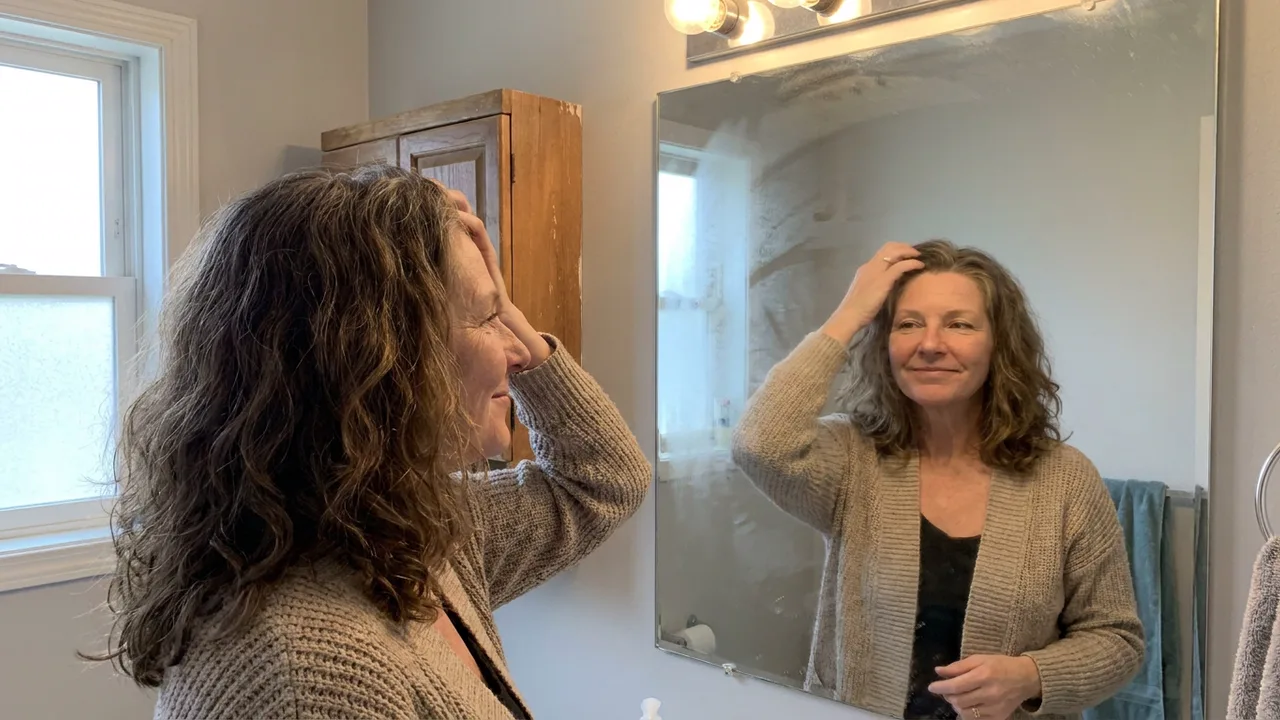
Read your scalp: five common states
| What you notice | Likely cause | What usually helps |
|---|---|---|
| Tight, dry, small white flakes | Dry scalp, often worse in winter and around menopause | Mild shampoo, lukewarm water, conditioner on the lengths, less frequent heat |
| Greasy yellowish scales, itch, redness at the hairline or eyebrows | Seborrheic dermatitis (dandruff) | Dandruff shampoos with the ingredients MedlinePlus lists; see a doctor if it does not settle |
| Oily by the end of the day, flat roots | Normal oil on fine hair | Wash more often, skip heavy conditioner at the roots |
| Sore or tender along the part or hairline | Tension from tight styles, clips or heavy hair pieces | Looser styles, change where you clip and part |
| Burning, pain, pus bumps, shiny smooth patches | Needs a medical check | See a doctor |
How to wash a thinning scalp
Many women with thinning hair start washing less, afraid of every hair that ends up in the drain. That fear is understandable but misplaced. The hairs you see after washing were already loose; the water just collects them in one place. Skipping washes lets oil, sweat and product build up, which makes the scalp itchy and the hair flat.
- Use lukewarm water. Very hot water dries the scalp and leaves it tight.
- Shampoo the scalp, not the ends. Work a small amount into the scalp with your fingertips, not your nails. The suds will clean the lengths as you rinse.
- Choose mild. A gentle shampoo is enough for most days. Strong clarifying shampoos are for occasional buildup only.
- Condition the lengths only. Keep heavy conditioner away from the roots, where it weighs fine hair down.
- Rinse well. Leftover product feels like itch and looks like flakes.
- Blot, don't rub. Press water out with a soft towel or an old T-shirt.
- Detangle from the ends. Wide-tooth comb, working up, never from the root down.
How often? Every one to three days works for most women. If your scalp gets oily or itchy fast, wash more often with a milder product rather than less often with a stronger one.
Flaking, itch and greasy scales
Seborrheic dermatitis is the medical name for the common, flaky, sometimes greasy scaling most people call dandruff. MedlinePlus describes it as an inflammation of the skin that causes flaky, white to yellowish scales on oily areas such as the scalp, often with itching, and notes that it can come and go.
For mild cases, MedlinePlus lists over-the-counter dandruff shampoos with ingredients such as salicylic acid, coal tar, zinc pyrithione, selenium sulfide or ketoconazole. A few practical tips make them work better:
- Leave the shampoo on the scalp for a few minutes before rinsing.
- Alternate with your regular mild shampoo if your hair feels dry.
- Give it a couple of weeks before judging.
- If it does not settle, or the scalp is sore, see your doctor.
Dry shampoo and buildup
Dry shampoo is a lifesaver for volume, but it is a powder that sits on the scalp. Use it on day one or two, then wash it out properly. Brush through gently before washing so less of it is left behind.
Where Rosedil fits. Rosedil is a hair loss support capsule (60 per bottle) taken at night, before bed, as the label directs. The makers built it for women who are watching their hair thin and want a simple nightly step. See today's kits, from $49 a bottle.
When your scalp shows through: protect it and soften the look
"I can see my scalp under the bathroom light" is one of the most common things women with thinning hair say. A few simple moves help both the skin and the look:
- Protect it from the sun. A part or crown that shows through can burn. Wear a hat outdoors or use a sunscreen made for the scalp.
- Change your part. Shifting it even an inch lifts flattened roots and hides the line you are used to seeing.
- Use a color-matched root powder. Tinted powders close the color gap between hair and scalp for the day and wash out at night.
- Avoid tension. Tight ponytails, buns and clips that pull along the part strain the follicles. MedlinePlus lists hairstyles that put too much tension on the hair follicles among the causes of hair loss.
- Turn down the heat. MedlinePlus also lists excessive shampooing and blow-drying. Air-dry most of the way, then lift the roots on low heat.
More ideas for styling, from cuts to color, are in our guide to thinning hair after 50, and the full daily plan is in our routine for thinning hair.
Scalp care from the inside
Everything above happens on the surface. What happens in the follicle depends on what reaches it from inside the body: enough protein and iron, a working thyroid, steady sleep, and less of the stress that pushes hair into its resting phase.
That is also where the makers of Rosedil start. They say hair loss starts inside the body, and that two drops of oil on the scalp stay on the surface. So instead of another product to massage in, Rosedil is a capsule. No oil, no foam, nothing to rub in, nothing to leave on your pillow. You take the capsules at night before bed, as the label directs, and keep your usual washing routine in the morning.
The makers describe their formula as a four-step sequence around concentrated rosemary, Japanese green tea, turmeric with ginger and hydrolyzed type 1 gelatin, aimed at waking sleeping follicles so new strands come in thicker. Results are individual, and because hair moves in months, most women start with 3 or 6 bottles. See what Hair Loss Support means on the label.
Scalp signs that need a doctor
Some scalp problems are more than dandruff or dryness. See a doctor if you notice:
- Pain, burning or tenderness on the scalp
- Pus bumps, crusting or areas that look infected
- Round patches of hair loss, or patches of shiny, smooth skin
- Scaly patches with broken hairs (MedlinePlus lists scalp ringworm among the causes of hair loss)
- Flaking or redness that does not settle with dandruff shampoo
Talk to your doctor before starting any supplement if you take any medication, or have a thyroid, blood pressure or other medical condition. Rosedil does not replace medical care.
The bottom line
Healthy hair needs a healthy place to grow. Wash regularly and gently, calm flakes and itch, loosen anything that pulls, keep the heat down and the sun off, and pay attention to the signs that need a doctor. Then support the follicle from the inside with enough protein, good sleep and a steady nightly step, and give it the months that hair always needs.
Ready to start Rosedil?
Three kits, one checkout. The 6-bottle kit brings each bottle to $49, and every kit carries the same 60-day money-back guarantee.
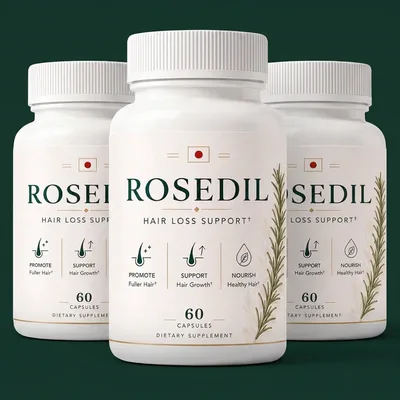
$207 total · 61% off
Free shipping
Choose 3 Bottles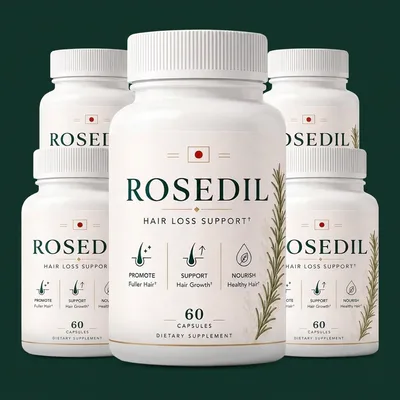
$294 total · 72% off
Free shipping
Get 6 Bottles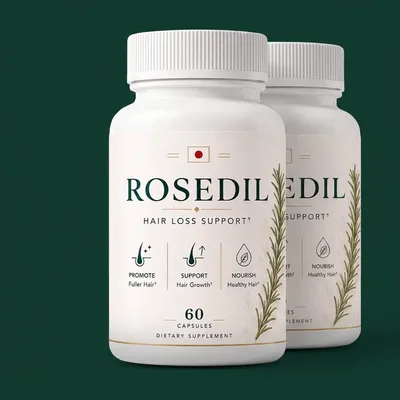
$158 total · 55% off
+ $9.99 shipping
Choose 2 BottlesSecure checkout · 60-day money-back guarantee
Payment runs through BuyGoods. Not sold on Amazon, eBay, Walmart, GNC or Walgreens.
Questions women ask
How often should I wash thinning hair?
Often enough to keep the scalp clean and comfortable, which for most women is every one to three days. Washing does not cause hair loss; the hairs you see in the drain were already loose.
Is dandruff making my hair thinner?
Flaking and itching do not usually cause thinning on their own, but scratching and inflammation can make a thin scalp look and feel worse. Calming the scalp makes styling easier and the part look tidier.
Should I put oil on my scalp for thinning hair?
Heavy oils can weigh fine hair down and, on an oily or flaky scalp, add to the buildup. If you use one, keep it light and wash it out. The makers of Rosedil chose a capsule because they say hair loss starts inside the body.
Can a visible scalp get sunburned?
Yes. A wider part or a thin crown lets the sun reach the skin. A hat outdoors or a sunscreen made for the scalp protects it.
When is a scalp problem a reason to see a doctor?
See a doctor for a scalp that is painful, burning, very red, has pus bumps or shiny smooth patches, or for round patches of hair loss. Those signs need a medical check.
Does Rosedil go on the scalp?
No. Rosedil is a capsule: no oil, no foam, nothing to rub in. You take it at night before bed, as the label directs, and keep your usual scalp routine.
Sources
- MedlinePlus Medical Encyclopedia: Seborrheic dermatitis
- MedlinePlus Medical Encyclopedia: Hair loss
- MedlinePlus: Hair loss (NIH, U.S. National Library of Medicine)
- NHS: Hair loss
Sources describe hair loss in general. They do not review Rosedil.