 Rosedil
Thinning Hair After 50: Why It Happens to Women and What Helps
Updated · rosedilhair.com editorial team · Reviewed against public health sources listed below
Short answer: After 50, most women's hair thins for two linked reasons: each hair spends less time in its growing phase, and the follicles slowly shrink, so new strands come in finer. Hormone changes around menopause speed this up, and low iron, thyroid problems, stress and some medications can add to it.
The good news is that a lot of it is manageable: rule out the hidden causes, protect the hair you have, choose a cut that adds body, and give your follicles a steady nightly routine for a few months.
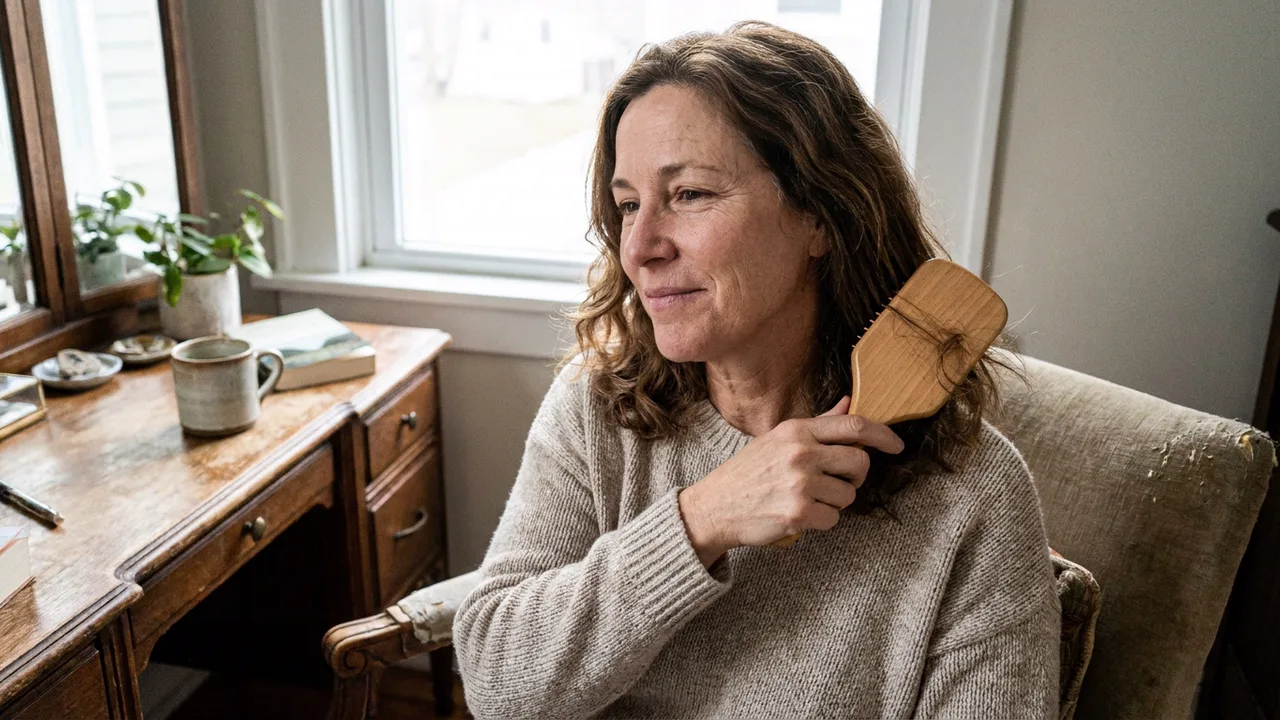
"I measure my ponytail with my fingers now." Women in their fifties say some version of that line all the time. The change rarely shows up as one empty spot. It shows up in the details: the hair tie that needs a third wrap, the scalp you can see under the bathroom light, the photos where you hold your head a certain way, the hats that used to be for sun and are now for hiding.
If that sounds like you, you are in very large company. Thinning hair after 50 is one of the most common changes women go through, and it is also one of the least talked about.
What are the first signs of thinning hair after 50?
- A wider part. The line down the middle looks broader than it did, especially under overhead light.
- More scalp on top. The crown shows through when your hair is wet or pulled back.
- A lighter ponytail. Less weight in the hand, more wraps of the tie.
- More hair in the brush and drain. Shedding that used to be a few strands is now a small clump.
- Finer texture. Strands feel softer and flatter and do not hold a style the way they used to.
- Short, fine hairs along the part. Wispy strands that never seem to grow long.
Notice what is usually not on the list: a receding hairline at the front. In women, the front edge typically stays in place while the top and crown thin. That pattern is one of the ways doctors tell female pattern hair loss apart from other causes.
Why does hair thin after 50?
The growing phase gets shorter
Every scalp hair grows for a few years, rests for a few months, then falls so a new one can start. With age, the growing phase tends to shorten. Strands stop sooner and fall sooner, and a larger share of your hair is resting at any one time. That is why many women notice more shedding and shorter, wispier ends even before the part looks different.
The follicles slowly shrink
In female pattern hair loss, the follicles on top of the head get a little smaller with each cycle. Medical texts call this miniaturization. A smaller follicle makes a finer, shorter strand. Over years, thick hairs are replaced with thinner ones, and the overall look goes from full to see-through without any obvious empty patch. MedlinePlus Genetics notes this form of hair loss tends to run in families, though it can show up even without a family history.
Hormones shift
Around menopause, estrogen and progesterone fall. Hair follicles respond to hormones, and the balance between estrogen and androgens shifts as estrogen drops. That is one reason thinning often becomes noticeable in the years around menopause. We cover this in depth in menopause and thinning hair.
The strand itself changes
Graying hair often feels different, coarser in some women and finer in others, and it can be drier and more fragile. More breakage on top of thinning makes the whole head look sparser.
It is not your fault. The makers of Rosedil say it plainly: thinning after 50 is not vanity, and it is not a failure of discipline. Your follicles did not die. In their words, they fell asleep.
Hidden causes worth checking after 50
Before assuming it is "just age," it is worth ruling out the causes a doctor can find and fix. MedlinePlus lists several that are common in women this age:
| Possible cause | Clues | What to ask your doctor |
|---|---|---|
| Low thyroid | Tiredness, feeling cold, dry skin, weight gain, dry thinning hair | Thyroid blood test |
| Low iron | Fatigue, pale skin, shortness of breath on stairs, heavy periods before menopause | Iron stores and blood count |
| A recent shock to the body | Surgery, high fever, a hard illness or a crash diet two to three months before the shedding started | Whether it looks like temporary shedding |
| Medications | Shedding that began after a new prescription; MedlinePlus lists some blood pressure drugs and antidepressants among possible causes | Whether any of your medicines can affect hair (never stop one on your own) |
| Not enough protein | Low-calorie or restrictive eating, fast weight loss | Whether your diet covers your needs |
If your thinning started suddenly after one of those events, read our guide on shedding versus thinning; the two look alike but behave very differently.
Cuts and styling that make thin hair look fuller after 50
None of these change your follicles, but they change what you see in the mirror tomorrow morning, and that matters.
- Go a little shorter. A bob or a lob (long bob) with blunt ends keeps the bottom edge dense. Long hair pulls down and shows the part more.
- Fewer layers, not more. Heavy layering removes bulk from hair that has little to spare. Ask for a few soft, face-framing pieces instead.
- Move your part. Shifting it an inch to one side lifts the roots on top and hides the line you have been staring at.
- Dry the roots first. Lift at the root with a round brush on low heat, then let the ends air-dry.
- Soften the color contrast. Dark hair over a light scalp shows every gap. A colorist can soften the difference at the root with lowlights or a shade closer to your skin.
- Skip heavy products. Oils and thick creams weigh fine hair down and make it separate. Light volumizing products sit better.
Everyday care that protects the hair you have
MedlinePlus includes excessive shampooing and blow-drying and hairstyles that pull on the follicles among the causes of hair loss. That gives you a simple list of habits to change:
- Loosen ponytails and buns; switch to soft scrunchies or claw clips.
- Detangle wet hair with a wide-tooth comb, starting at the ends.
- Turn the heat down on dryers, curling wands and flat irons, and use them less often.
- Choose a gentle shampoo and focus it on the scalp; condition the lengths.
- Sleep on a smooth pillowcase so less hair snags overnight.
- Eat enough protein every day, especially if you are trying to lose weight.
Your scalp deserves attention too: flaking, itching and buildup can make thinning look worse. Our scalp care guide covers what helps.
Where Rosedil fits. Rosedil is a hair loss support capsule (60 per bottle) taken at night, before bed, as the label directs. The makers built it for women who are watching their hair thin and want a simple nightly step. See today's kits, from $49 a bottle.
Where a nightly capsule like Rosedil fits
Styling hides thinning; gentle care slows breakage. Neither reaches the follicle. That is the gap the makers of Rosedil say they designed for. Their view is that hair loss starts inside the body, so their formula is a capsule built around concentrated rosemary, Japanese green tea, turmeric with ginger and hydrolyzed type 1 gelatin, in a sequence they call wake, clear, calm, thicken.
You take the capsules at night before bed, as the label directs. Nothing to rub on, no residue in your hair, nothing to rinse. For women over 50 who have already tried oils and foams, that simplicity is a big part of the appeal.
The makers describe the first month as the time when less hair shows up in the drain, the brush and on the pillow, and month three as when the part starts to close. Those are their words, not a promise, and results vary from woman to woman. What is not in doubt is the timescale: hair moves in months, which is why the 3- and 6-bottle kits are the popular choices. Read more on how the cycle sets that pace in Rosedil for hair growth.
What women over 50 want back
- A pillow with no hair on it in the morning
- A part that does not show under every light
- A ponytail with some weight in the hand
- Going out without a hat or a clip to hide it
- Being in the family photo instead of taking it
When to see a doctor about thinning hair after 50
Book a visit if your hair is falling out in patches or clumps, if your scalp is red, scaly, painful or itchy, if the thinning came on quickly, or if you also feel tired, cold or weak, or notice weight changes. Ask about thyroid and iron tests.
Before starting any supplement, talk to your doctor if you take any medication, or have a thyroid, blood pressure or other medical condition. Rosedil does not replace medical care.
The bottom line
Thinning hair after 50 usually comes from a shorter growing phase and slowly shrinking follicles, pushed along by the hormone changes of menopause. Check the fixable causes first, change the habits that pull and overheat, choose a cut that keeps the ends dense, and give your follicles a steady routine measured in months, not days. A nightly capsule like Rosedil is the step that adds support from the inside.
Ready to start Rosedil?
Three kits, one checkout. The 6-bottle kit brings each bottle to $49, and every kit carries the same 60-day money-back guarantee.
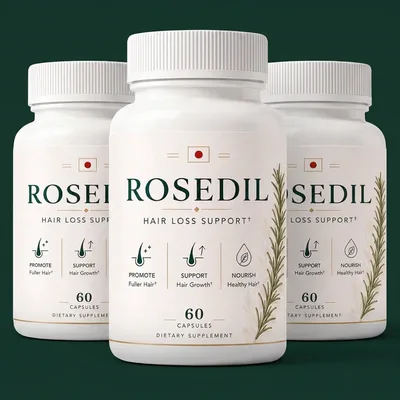
$207 total · 61% off
Free shipping
Choose 3 Bottles
$294 total · 72% off
Free shipping
Get 6 Bottles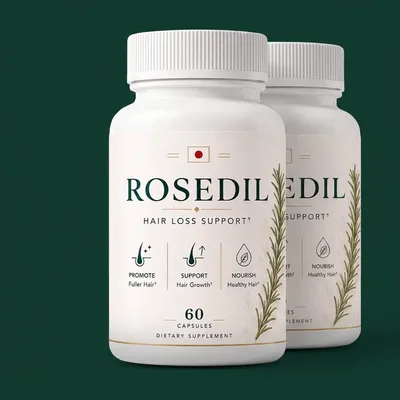
$158 total · 55% off
+ $9.99 shipping
Choose 2 BottlesSecure checkout · 60-day money-back guarantee
Payment runs through BuyGoods. Not sold on Amazon, eBay, Walmart, GNC or Walgreens.
Questions women ask
Is it normal for a woman's hair to thin after 50?
It is very common. Pattern hair loss becomes more frequent with age and especially after menopause, and the growing phase of each hair tends to get shorter. Common does not mean you have to accept it without doing anything.
What is the most common cause of thinning hair in women over 50?
Female pattern hair loss, which shows as a wider part and thinner hair on top while the front hairline stays. Hormone changes, low iron, thyroid problems, stress and some medications can add to it or mimic it.
Which blood tests should I ask about?
Many doctors check iron stores and thyroid function first, because both are common, easy to test and fixable. Your doctor will decide what fits your history.
What haircut makes thin hair look fuller after 50?
Shorter to mid-length cuts with blunt ends, like a bob or a lob, usually look fuller than long layered hair. Soft face-framing pieces and moving your part a little to one side also help.
Can a supplement help with thinning hair after 50?
Rosedil is a hair loss support capsule made for women in this age group, taken at night before bed. The makers say it is built to wake sleeping follicles and help new strands come in thicker. Results are individual.
How long should I try before judging?
Give it at least three months. Hair grows about half an inch a month and follicles change on a cycle of months, so a few weeks is too short to judge any approach.
Sources
- StatPearls (NCBI Bookshelf): Pattern hair loss
- MedlinePlus Genetics: Pattern hair loss
- MedlinePlus Medical Encyclopedia: Hair loss
- MedlinePlus: Hypothyroidism
- MedlinePlus Medical Encyclopedia: Iron deficiency anemia
Sources describe hair loss in general. They do not review Rosedil.